Showing posts with label Bath England. Show all posts

Saturday, May 18, 2013

Day 11 - Bath - Introduction on Tuesday, May 14th, 2013

Pam and I spent a full day in Bath.  It was a cold and rainy day.  But we covered all we intended to.  Boy were we tired!  Cold and wet weather burns up energy quickly.  We were revived at a wonderful Greek Restaurant that we found on Parade Rd on our way to the car park.

Bath was built initially by the Romans around 60 AD.  They called it "Aquae Sulis".  The Romans built baths in the area that were fed by hot water springs in the area.  The baths were quite popular.

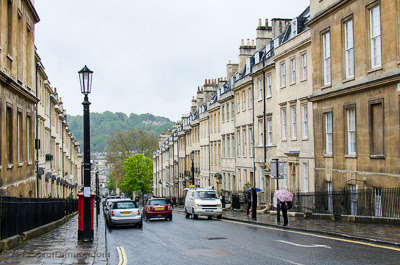
The baths regained their popularity in the Georgian era as a spa town.  As a result, the city grew quickly.  Today, the Georgian architecture is everywhere in Bath.  The buildings are built using Bath Stone, an attractive form of limestone.


The view from Parade Rd of the barges on River Avon.  Barges are still popular in England.  We saw quite a few of the "Narrowboat" barges in Bath and Stratford upon Avon.


Hop On/Hop Off buses are an excellent way to see a city before exploring it on foot.  We took this bus for the complete circuit of Bath so that we could see the major landmarks and where they are located.  We then headed out on foot and used the bus to get to sites that were more than a short walk away.


We found Opa Meze Bar & Restaurant located underneath Parade Rd.  It was like eating in the Roman catacombs.  Great food!


Day 11 - Bath - The Circus & The Royal Crescent on Tuesday, May 14th, 2013

The father-son duo of John Wood The Older and John Wood The Younger significantly influenced the architecture of Bath, England.  Two examples of the Georgian architecture they utilized are The Circus designed by John Wood The Older and the Royal Crescent by John Wood The Younger.

The Circus was completed in 1768.  It is a circular design divided into three segments with a lawn with trees in the center.  The Circus was part of John Wood's vision of Bath that utilized Palladian architecture.  While it was designed by the father, it was completed under the direction of his son.

One of three segments

Second segment

The trees of the center

Looking down Gay Street from The Circus


The Royal Crescent, completed in 1774, is known as one of the best examples of Georgian architecture in the UK.  The building is composed of 30 townhouses in a crescent design.  The front of each townhouse was designed by John Wood The Younger.  However, the interiors and backs of each townhouse were designed by architects selected by each owner.  This difference is clearly illustrated by this photo and is common in Bath.

The center of The Royal Crescent from the east entrance.

Rain Walkers

The west side.


Friday, May 17, 2013

Day 11 - Bath - Bath Abbey on Tuesday, May 14th, 2013

Bath Abbey was built in the 1500's, then repaired in the 1600's and again in the 1800's.  It is located in the center of Bath adjacent to the Roman Baths.  It is a beautiful structure.  We strolled up and down the isles, looking at each of the beautiful stained glass windows, the masonry and the memorials.  It is definitely worth a visit!

Learn more at the Bath Abbey website: http://www.bathabbey.org/visiting-abbey
Wiki: http://en.wikipedia.org/wiki/Bath_Abbey


Day 11 - Bath - Fashion Museum on May 14th, 2013

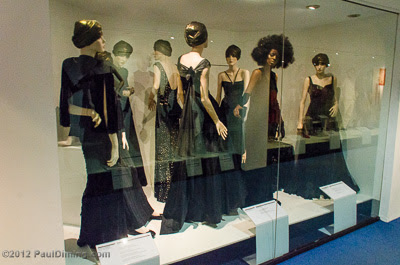
Fashion really isn't my thing.  But Pam wanted to see the Bath Fashion Museum so I said fine.  After all, a great journey should include places of interest to all in the party.  Located in the Bath Assembly Rooms building, the museum includes over 30,000 objects dating from 1600.

Learn about the Fashion Museum here: http://www.museumofcostume.co.uk/

2012 Dress of the Year


How Many Can She Hide In That Hoop Skirt?


An amazing collection... 


Red Dresses


Not so little black dresses


Day 11 - Bath - The Roman Baths on Tuesday, May 14th, 2013

The Romans amaze me!  During our visits to Vindolanda and Bath, we found extensive, well preserved Roman ruins.  Both featured incredible baths.  Not just the type we have in our homes.  Their baths were complex, including hot (Caldarium), warm (Tepidarium) and cold (Frigidarium) baths.  The floors of the Caldarium were heated by hot air flowing underneath the floor supported by a structure called a "Hypocaust."

We visited the Roman Baths in Bath, England.  The baths are fed by hot springs.  The first structure was built by the Celts as a temple dedicated to the goddess Sulis.  The Romans built their temple between 60 AD and 70 AD.  The bath complex was built over the next 300 years.

The baths were lost by the 6th century due to flooding and silting. In the 12th and 16th centuries, new structures were built around the springs.  The baths became popular again the 18th century when it was claimed that the baths cured King Bladud and his herd of pigs of leprosy.

To learn more about the Roman Baths, visit the The Roman Baths website and the Wiki.

The Roman Baths from Abbey Square

Reception Hall Dome
Built in the Victorian times (1800's).

Statue on the Terrace
There are several on the terrace.  They are coated with a sacrificial layer of plaster which is then eaten away by acid rain.

The Great Bath with Bath Abbey in the background from the Terrace
The temperature of the water is 114.8F.  The hot water flows in from the spring at a rate of 309,081 US gallons per day. 

Costumed Actors Posing For Photographs

Model

The Gorgon's Head On The Temple Pediment

Sculpture

Arch In The Sacred Spring

Spring Overflow

Incoming Hot Water

Archaeologists

Fragment From A "Roof Spline"

Ghosts Bathing In The Circular Bath

Roman Lead Pipe

Sacred Spring

Caldarium Hypocaust
The floor rested on top of these pylons.  Hot air was circulated between the pylons to heat the floor, thus heating the room.


Day 11 - Bath - Bath Assembly Rooms on Tuesday, May 14th, 2013

In 1769, where would one go to flirt?  Where did you go to find someone new?  To the Bath Assembly Rooms!  Built by John Wood the Younger, they were a popular gathering place of both sexes of the upper classes.  Back then, there were few places to meet potential spouses.  The rooms consisted of a large ball room or two, a tea room, a card room and a supper room.

Jane Austin lived in Bath and mentioned the Assembly Rooms in her novels "Northanger Abbey"  and "Persuasion" published in 1818.  Charles Dickens visited Bath and the Assembly Rooms.  He mentioned them in "Pickwick Papers".

In April 1942, the Germans bombed Bath completely destroying the interior of the Assembly Rooms.  They were restored after the war.  Check out these images of the Assembly rooms after the "Bath Blitz": http://www.bathintime.co.uk/collection/2251/bath-blitz-assembly-rooms-and-st-andrews/page/1/view/12

Pam and I found the rooms to be majestic, both in size and appearance.  The rooms are available venues for private functions today.  Learn more about the Assembly Rooms here:
Bath Venues: http://www.bathvenues.co.uk/assembly_rooms.aspx
Wiki: http://en.wikipedia.org/wiki/Bath_Assembly_Rooms

Click on the images to view them in Flickr.


The Octagon Room

Chandelier

Tea Room

Ball Room

Bath Chair